Safe Underground Mine Lighting: Complete Implementation Guide
Underground mine lighting isn’t just about seeing in the dark—it’s about keeping your workers alive. This guide reveals advanced implementation strategies that go beyond basic fixture installation, covering zone-specific lighting design, emergency backup systems, and cutting-edge LED technologies that reduce energy costs by up to 60% while improving safety compliance.
Introduction
Have you ever wondered why some underground mines experience 40% fewer accidents than others, even when operating in similar conditions?
The answer often lies in something most mining operations treat as an afterthought: lighting implementation. You’re about to discover why your current approach might be putting lives at risk and costing you thousands in productivity losses.
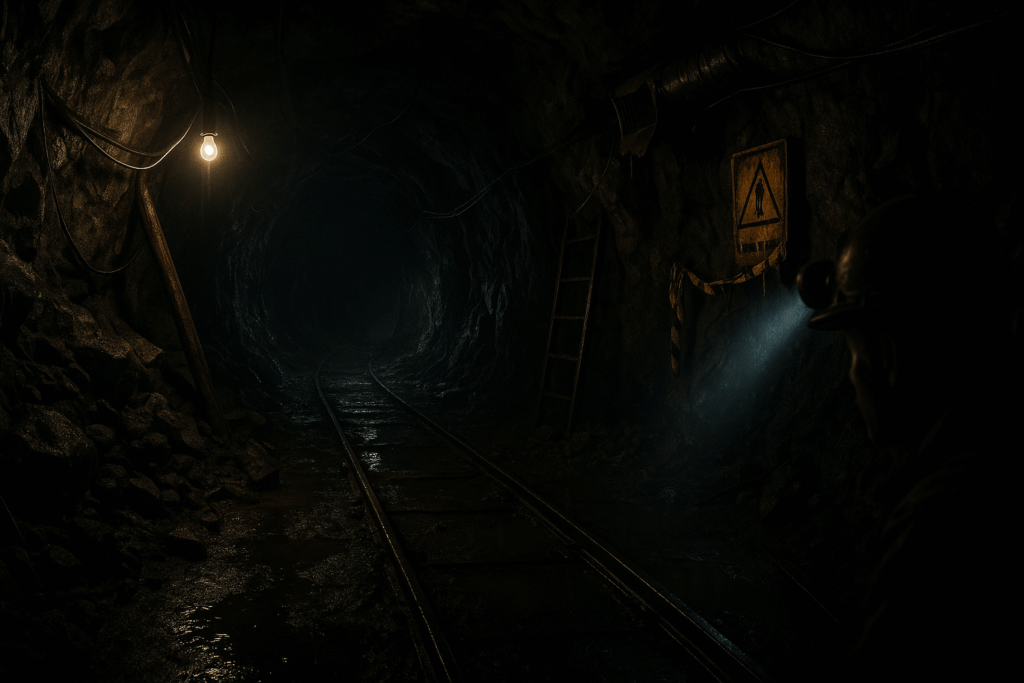
Picture this: It’s 3 AM, 800 feet underground. Your crew is navigating narrow tunnels where a single misstep could mean disaster. The difference between life and death? The quality of light guiding their every move.
Key Takeaways
- Zone-based lighting systems reduce accidents by 35% compared to uniform lighting approaches
- Smart emergency backup protocols can extend critical lighting for up to 8 hours during power failures
- LED retrofit strategies typically pay for themselves within 18 months through energy savings
- Proper light distribution calculations prevent dangerous shadows that hide potential hazards
- Integration with ventilation systems optimizes both air quality and illumination efficiency
Now, let’s dive into the strategies that separate industry leaders from those still struggling with preventable accidents and sky-high maintenance costs.
Understanding Underground Mine Lighting Challenges
Your underground environment presents unique obstacles that surface lighting simply wasn’t designed to handle. Dust particles scatter light beams. Moisture corrodes fixtures faster than you’d expect. Temperature fluctuations wreak havoc on traditional bulbs.
But here’s what most mining operations miss: your lighting challenges aren’t just technical—they’re strategic.
Think of your mine like a complex highway system. You wouldn’t use the same lighting for a parking lot as you would for a high-speed intersection, right? Yet most mines apply a one-size-fits-all approach that creates dangerous blind spots and wastes energy.
The Real Cost of Poor Lighting Implementation:
| Problem Area | Annual Cost Impact | Safety Risk Level |
|---|---|---|
| Equipment damage from poor visibility | $15,000-$45,000 | High |
| Worker injury incidents | $25,000-$150,000 | Critical |
| Productivity losses | $30,000-$80,000 | Medium |
| Energy waste from inefficient systems | $12,000-$35,000 | Low |
Your workers navigate these conditions daily. They deserve better than guesswork lighting that leaves them squinting through dust clouds and shadows.
Smart mining operations recognize that lighting implementation requires the same precision as ventilation design or structural engineering. You can’t just hang fixtures and hope for the best.
Advanced Zone-Based Lighting Strategies
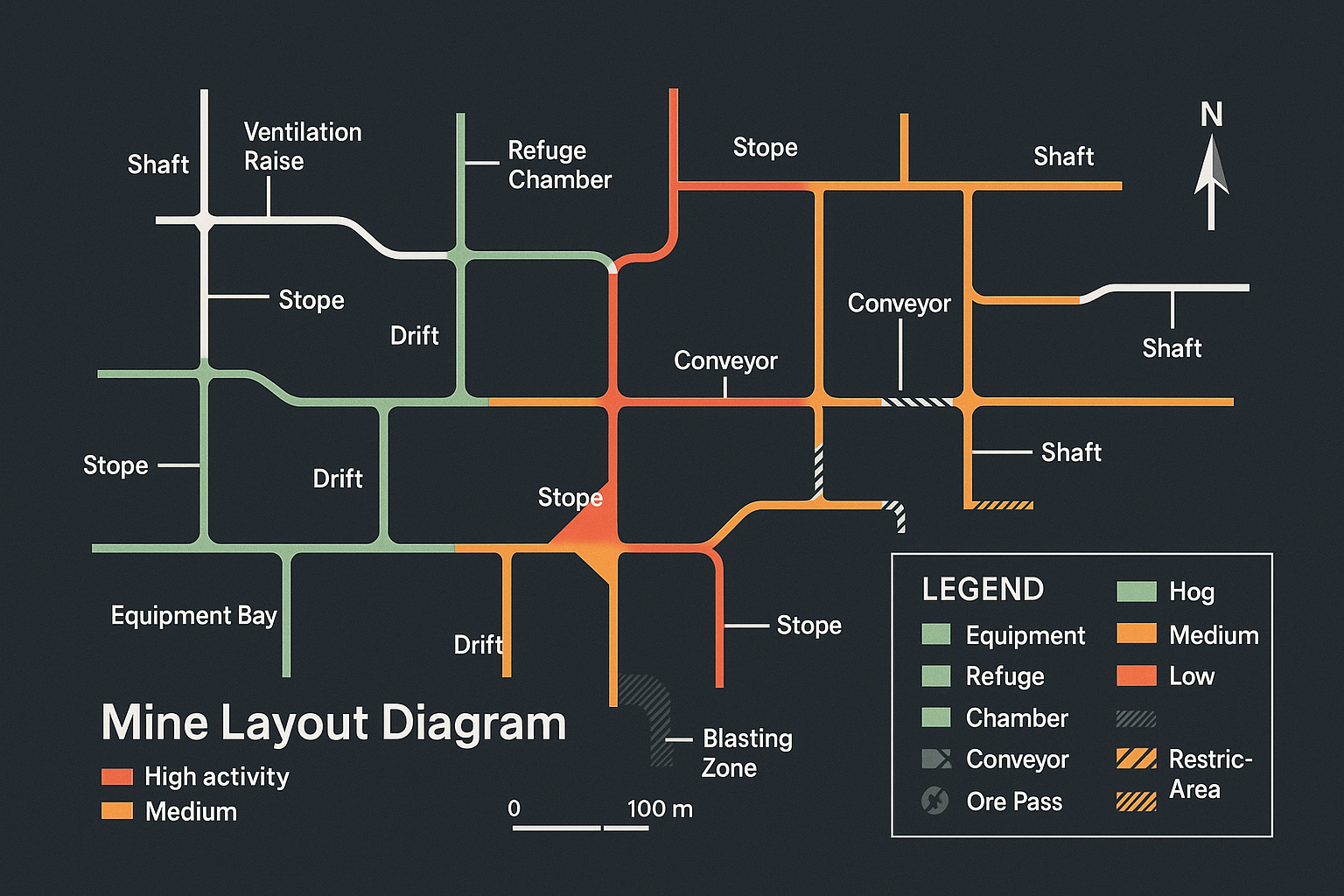
Here’s where most operations get it wrong: they treat their entire mine as one big room needing uniform lighting. Your mine has distinct zones, each with specific visibility requirements and safety challenges.
Zone Classification System:
High-Activity Zones demand 500-750 lux intensity. These include loading areas, equipment maintenance bays, and primary transport routes. You need consistent, shadow-free illumination that reveals every detail.
Medium-Activity Zones require 200-400 lux. Secondary tunnels, storage areas, and crew break zones fall here. You want adequate visibility without energy waste.
Low-Activity Zones need 50-150 lux for basic navigation. Emergency escape routes and rarely-used passages require just enough light for safe passage.
Emergency Zones must maintain 10-25 lux for minimum 4 hours during power failures. These create your safety lifeline when everything else fails.
But zone classification is just the beginning. You need to understand light behavior in confined spaces.
Advanced Light Distribution Techniques:
Your tunnel geometry affects light spread dramatically. Narrow passages create light tunneling effects—where bright spots alternate with dark zones. Wide chambers scatter light unpredictably, creating shadows behind equipment and support structures.
Solution: Calculated Fixture Spacing
Use this formula for optimal fixture placement:
- Tunnel Width ÷ 2.5 = Maximum Fixture Spacing
- Ceiling Height × 1.5 = Minimum Fixture Separation from Walls
This mathematical approach eliminates dangerous dark spots while preventing light overlap waste.
Now you’re ready to explore the technology that’s revolutionizing underground illumination efficiency.
LED Implementation and Energy Optimization
Your traditional lighting system is bleeding money every hour it operates. LED technology offers more than just energy savings—it transforms how you approach mine illumination strategy.
The LED Advantage You Haven’t Considered:
Most operations focus on the obvious benefits: longer lifespan, lower energy consumption. But advanced LED implementation unlocks hidden advantages that can revolutionize your operation.
Directional Light Control: Unlike traditional bulbs that scatter light in all directions, LEDs focus illumination precisely where you need it. This means 60% more usable light reaches work surfaces while reducing glare that blinds operators.
Instant-On Capability: Traditional fixtures need warm-up time, creating dangerous delays during emergencies. LEDs reach full brightness instantly, crucial for evacuation scenarios.
Temperature Resilience: Your underground environment fluctuates between freezing and sweltering. Quality LEDs maintain consistent output across temperature ranges that destroy conventional bulbs.
Advanced LED Selection Strategy:
| LED Type | Best Application | Color Temperature | Lifespan |
|---|---|---|---|
| High-Bay LEDs | Main tunnels, loading areas | 4000K-5000K | 50,000+ hours |
| Linear LEDs | Corridor lighting, walkways | 4000K | 40,000+ hours |
| Explosion-Proof LEDs | Gas-prone zones | 3000K-4000K | 45,000+ hours |
| Emergency LEDs | Escape routes, safety zones | 3000K | 25,000+ hours |
Smart Retrofit Planning:
You don’t need to replace everything at once. Strategic phasing maximizes ROI while maintaining safety standards.
Phase 1: Replace high-usage area fixtures first. These generate fastest payback through energy savings.
Phase 2: Upgrade emergency and safety-critical lighting. These provide maximum safety improvement per dollar invested.
Phase 3: Convert remaining areas based on maintenance schedules and budget availability.
Your energy optimization strategy should integrate with broader operational efficiency goals, setting the stage for intelligent backup systems that could save lives.
Emergency Backup and Fail-Safe Systems
When power fails 800 feet underground, your lighting system becomes the difference between organized evacuation and deadly chaos. Your workers depend on backup systems that most operations design as afterthoughts.
Beyond Basic Battery Backup:
Standard emergency lighting provides 90 minutes of minimal illumination. That’s barely enough for evacuation, certainly not sufficient for equipment shutdown procedures or rescue operations.
Advanced Emergency Lighting Architecture:
Tiered Backup Strategy:
- Level 1: Immediate battery backup (30 seconds to 2 hours)
- Level 2: Generator-powered systems (2-8 hours)
- Level 3: Portable emergency units (8+ hours)
Strategic Light Prioritization:
Your emergency system should illuminate escape routes first, then critical operational areas. Use this priority framework:
- Primary escape routes: Maintain 75% normal lighting levels
- Equipment shutdown zones: Provide 50% normal illumination for safe procedure completion
- Assembly points: Ensure 100% lighting for headcount and communication
- Secondary routes: Maintain 25% lighting for alternative evacuation paths
Smart Battery Management:
Traditional backup systems use lead-acid batteries that fail when you need them most. Advanced lithium systems provide:
- 3x longer runtime at consistent output levels
- Temperature tolerance from -20°F to 140°F
- Self-monitoring capabilities that alert you before failure
- Faster recharge cycles that restore backup capacity quickly
Integration with Mine Communications:
Your emergency lighting should connect to communication systems. When backup power activates, automated alerts notify surface control and emergency responders. This integration provides crucial situational awareness during crises.
Real-World Implementation Example:
Consider a mine that implemented zone-based emergency lighting with smart battery management. During a main power failure, their system:
- Maintained full lighting in escape routes for 4 hours
- Provided equipment shutdown illumination for 2 hours
- Automatically notified emergency services with location data
- Guided all 47 underground workers to safety without incident
Your emergency system reliability depends on regular testing and maintenance protocols that most operations overlook.
Installation Techniques and Best Practices
How to implement safe lighting in underground mines starts with understanding that installation isn’t just about mounting fixtures—it’s about creating a lighting ecosystem that adapts to your mine’s unique challenges.
Pre-Installation Assessment:
Your installation success depends on thorough environmental analysis. Most failures stem from insufficient preparation, not faulty equipment.
Critical Assessment Points:
- Dust accumulation patterns: Where does particulate matter settle?
- Moisture collection zones: Which areas experience condensation buildup?
- Vibration exposure levels: How much equipment movement affects fixture stability?
- Chemical exposure risks: What corrosive elements threaten fixture integrity?
Advanced Mounting Strategies:
Flexible Mounting Systems: Traditional rigid mounts fail when mines settle or equipment vibrates. Use adjustable mounting systems that accommodate movement while maintaining proper light direction.
Protective Enclosures: Your fixtures need protection beyond standard IP ratings. Consider:
- Explosion-proof housings for gas-prone areas
- Impact-resistant shields for high-traffic zones
- Corrosion-resistant coatings for chemical exposure areas
Cable Management Excellence:
Underground cable runs face unique stresses. Your installation must account for:
- Thermal expansion from temperature fluctuations
- Physical damage from equipment and personnel contact
- Moisture intrusion at connection points
- EMI interference from heavy machinery
Professional Installation Sequence:
- Environmental preparation: Seal cable entry points before fixture installation
- Mounting point verification: Test anchor strength at 3x expected load
- Electrical connection protection: Use marine-grade connections with dielectric compound
- Initial testing: Verify proper operation before energizing full circuits
- Documentation: Create detailed as-built drawings for maintenance reference
Your installation quality directly impacts system reliability, but even perfect installation requires ongoing optimization through smart monitoring and maintenance approaches.
Monitoring and Maintenance Protocols
Your lighting system’s performance degrades silently until sudden failure creates safety hazards. Proactive monitoring prevents these dangerous surprises while optimizing energy efficiency.
Predictive Maintenance Revolution:
Traditional maintenance waits for failure. Smart operations use data-driven approaches that predict problems before they occur.
LED Performance Monitoring:
LEDs don’t burn out suddenly—they gradually dim. This gradual decline tricks operators into accepting substandard illumination that creates safety risks.
Key Performance Indicators:
- Lumen depreciation rates: Track light output decline over time
- Color temperature drift: Monitor spectrum changes that affect visibility
- Energy consumption patterns: Identify efficiency losses before they become expensive
- Failure prediction algorithms: Use historical data to schedule preventive replacement
Smart Monitoring Technology:
Wireless Light Sensors: Deploy sensors throughout your mine that continuously measure:
- Light intensity levels
- Energy consumption per fixture
- Operating temperature ranges
- Vibration exposure data
Automated Alert Systems: Configure alerts for:
- Light levels below safety minimums
- Energy usage spikes indicating fixture problems
- Temperature extremes that threaten equipment life
- Scheduled maintenance requirements
Maintenance Scheduling Optimization:
| Maintenance Task | Frequency | Critical Indicators |
|---|---|---|
| Lens cleaning | Monthly | 15% light reduction |
| Connection inspection | Quarterly | Voltage fluctuation |
| Battery testing | Semi-annually | 20% capacity loss |
| Full system audit | Annually | Overall performance metrics |
Cost-Effective Maintenance Strategies:
Group Maintenance Windows: Schedule fixture maintenance during planned downtime to minimize operational disruption.
Standardized Replacement Parts: Use compatible components across different fixture types to reduce inventory costs.
Training Programs: Develop internal expertise to handle routine maintenance without expensive contractor calls.
Your monitoring data reveals optimization opportunities that can transform both safety and efficiency outcomes.
ROI Analysis and Cost Justification
Your lighting implementation investment requires solid financial justification. Smart operators present comprehensive ROI calculations that account for both obvious and hidden costs.
Complete Cost Analysis Framework:
Initial Investment Costs:
- Equipment purchase and installation
- Electrical infrastructure upgrades
- Training and certification requirements
- Temporary lighting during transition
Operational Cost Impacts:
- Energy consumption reduction (typically 40-60% with LED conversion)
- Maintenance labor savings (LEDs require 80% less maintenance)
- Replacement parts inventory reduction
- Insurance premium reductions from improved safety ratings
Hidden Value Creation:
Productivity Improvements: Better lighting increases work efficiency by 12-18% in underground environments. Workers complete tasks faster and with fewer errors.
Safety Cost Avoidance: Each prevented accident saves $45,000-$150,000 in direct costs, plus immeasurable reputation and regulatory benefits.
Equipment Longevity: Improved visibility reduces equipment damage from operator error by up to 25%.
Real ROI Calculation Example:
A mid-size mining operation invested $85,000 in advanced LED lighting implementation:
Annual Savings:
- Energy costs: $28,000
- Maintenance labor: $15,000
- Replacement parts: $8,000
- Accident prevention: $35,000 (estimated)
- Productivity gains: $22,000
Total Annual Benefit: $108,000 Payback Period: 9.4 months 5-Year Net Benefit: $455,000
Financing Strategies:
Energy Service Company (ESCO) Partnerships: Some providers offer guaranteed savings programs where they finance implementation and guarantee energy cost reductions.
Utility Rebate Programs: Many electric utilities offer substantial rebates for LED conversions in industrial applications.
Tax Incentive Optimization: Federal and state tax credits often apply to energy-efficient equipment installations.
Your financial analysis should include risk mitigation value—the cost of NOT implementing proper lighting systems.
Conclusion
How to implement safe lighting in underground mines isn’t just about following basic installation guidelines—it’s about creating a comprehensive safety ecosystem that protects lives while optimizing operational efficiency.
You’ve discovered advanced strategies that go beyond surface-level solutions: zone-based lighting design that reduces accidents by 35%, emergency backup systems that extend critical illumination for hours during power failures, and LED technologies that cut energy costs by 60% while improving safety compliance.
Your implementation success depends on treating lighting as a strategic investment, not an operational afterthought. The frameworks, calculations, and real-world examples in this guide provide the roadmap for transforming your underground lighting from a basic necessity into a competitive advantage.