
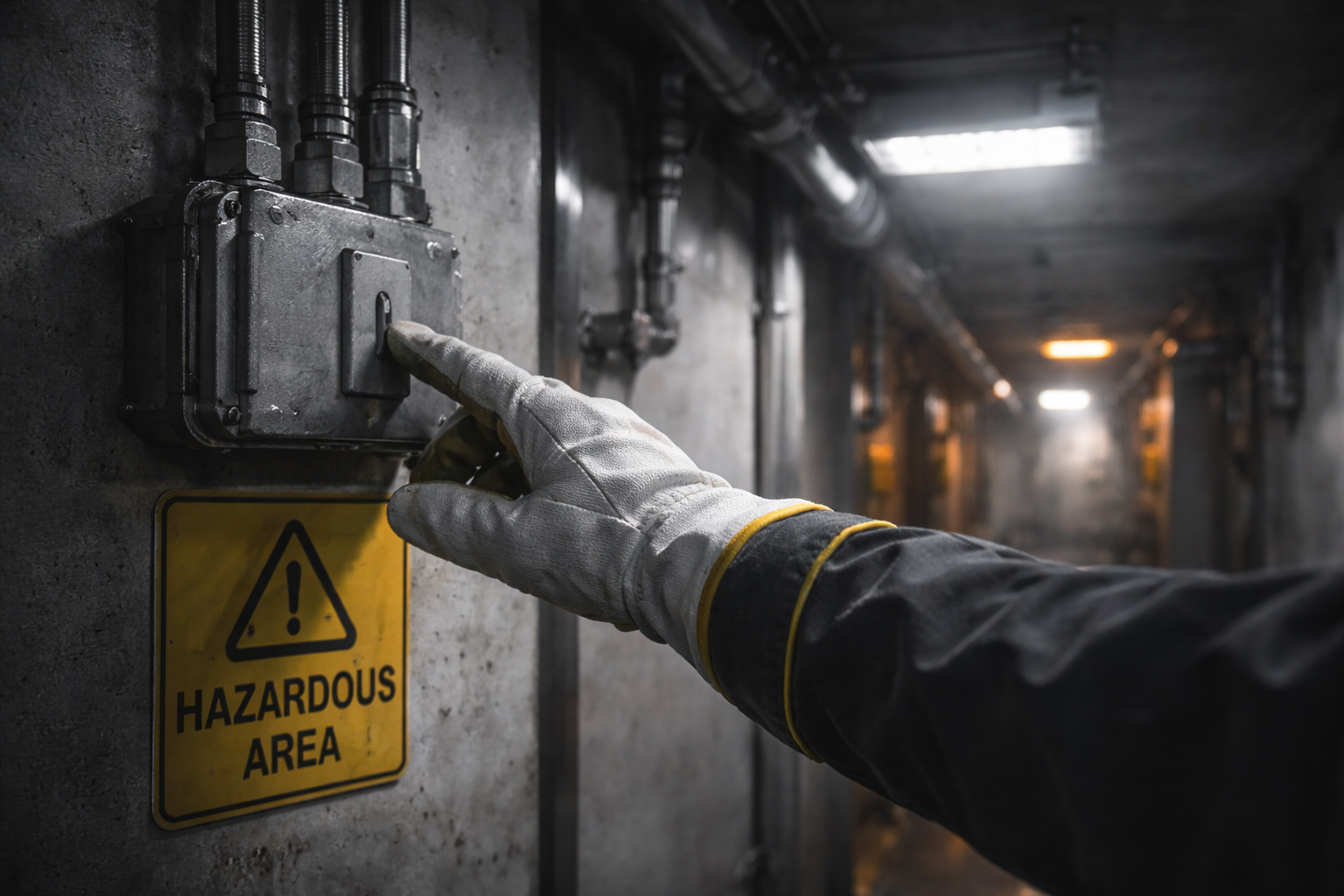
What Happens When Your Lighting Sparks Disaster?
Using non-compliant lighting in hazardous areas creates a perfect storm of explosion risks, legal nightmares, and potentially fatal consequences. Your facility’s safety—and your career—hang in the balance of proper lighting compliance.
Picture this: You’re walking through your facility at 2 AM when a simple light switch becomes the trigger for an industrial disaster that makes headlines.
One wrong lighting choice in a hazardous area doesn’t just violate codes—it transforms your workplace into a potential bomb. The question isn’t whether something will go wrong, but when. And when it does, you’ll face consequences that stretch far beyond a simple fine.
Here’s what you need to understand about the real stakes of lighting compliance.
Key Takeaways
• Immediate explosion risk from non-rated fixtures igniting flammable vapors or dust
• Legal liability including criminal charges for safety violations resulting in injuries
• Financial devastation through insurance denials, lawsuits, and operational shutdowns
• Career-ending consequences for facility managers who cut corners on safety compliance
• Practical solutions to identify, assess, and upgrade your lighting systems before disaster strikes
Your Lighting Could Be a Loaded Gun
Every day, your facility’s lighting system either protects lives or puts them at risk. There’s no middle ground.
Non-compliant lighting in hazardous areas creates ignition sources in environments filled with explosive materials. Picture a standard office fixture installed in a paint booth, chemical storage area, or grain elevator. That innocent-looking light becomes a spark waiting to happen.
The stakes couldn’t be higher. According to OSHA data, electrical ignition causes 25% of all workplace explosions. When investigators sift through the wreckage, they’re looking for one thing: who installed non-compliant equipment and why.
Your facility operates under constant scrutiny. Insurance inspectors, OSHA investigators, and local fire marshals all have the authority to shut you down instantly if they discover safety violations. A single non-compliant fixture can trigger a cascade of legal, financial, and operational disasters that destroy businesses overnight.
The most chilling part? You might not even know you’re using the wrong equipment. Many facilities inherit lighting systems installed by previous owners or contractors who cut corners. Others unknowingly compromise their safety during renovations or equipment updates.
But here’s what separates professional facility managers from those who gamble with lives: understanding exactly what hazardous area classification means and why proper lighting certification isn’t optional—it’s survival.
The Science Behind the Spark
Hazardous areas exist wherever flammable gases, vapors, liquids, or combustible dust create explosion risks. Think refineries, chemical plants, grain elevators, paint booths, and pharmaceutical manufacturing facilities.
These environments operate under strict classification systems. Class I locations contain flammable gases or vapors. Class II areas have combustible dust. Class III locations store easily ignitable fibers. Each class subdivides into divisions and zones based on how frequently hazardous materials are present.
Here’s where it gets technical: properly rated lighting fixtures undergo rigorous testing to ensure they won’t ignite surrounding materials. Explosion-proof fixtures contain any internal sparks or heat. Intrinsically safe equipment operates at energy levels too low to cause ignition. Dust-tight fixtures prevent combustible particles from entering electrical components.
Standard lighting fixtures lack these protections. They generate heat, create electrical arcs during switching, and allow hazardous materials to contact electrical components. It’s like installing a cigarette lighter in a gas tank
Now you’re ready to understand exactly what happens when someone ignores these fundamental safety principles.
The Devastating Reality of Non-Compliance
When non-compliant lighting ignites hazardous materials, the consequences unfold in a predictable sequence of destruction.
Immediate Physical Consequences:
The initial explosion often triggers secondary explosions as fire spreads to other hazardous materials. Blast pressure can collapse structures, while toxic smoke creates additional life-threatening conditions. Workers suffer burns, respiratory injuries, and trauma from debris. Fatalities are common.
Legal and Regulatory Framework:
| Violation Type | Potential Penalties | Criminal Liability | Timeline |
|---|---|---|---|
| OSHA Willful Violation | $70,000-$700,000 per incident | Yes, if death occurs | Immediate |
| NEC Code Violation | Varies by jurisdiction | Possible negligence charges | 30-90 days |
| Insurance Fraud | Policy cancellation + lawsuits | Federal criminal charges | 60-180 days |
| EPA Violations | $25,000-$50,000 per day | Environmental crimes | Ongoing |
Financial Devastation Decision Matrix:
Your financial exposure depends on multiple factors. Insurance companies routinely deny claims for losses caused by code violations. Personal injury lawsuits can reach millions per victim. Regulatory fines compound daily until you achieve compliance. Business interruption costs mount as operations cease indefinitely.
Implementation Strategy Checklist:
- Immediate Assessment (Week 1)
- Catalog all existing fixtures in hazardous areas
- Identify current hazardous area classifications
- Document any obvious non-compliant installations
- Photograph everything for legal protection
- Professional Evaluation (Week 2-3)
- Hire certified electrical engineer specializing in hazardous locations
- Conduct comprehensive hazardous area classification study
- Obtain detailed compliance gap analysis
- Develop prioritized remediation plan
- Emergency Mitigation (Week 4)
- Immediately disconnect obviously non-compliant fixtures
- Install temporary compliant lighting where possible
- Post warning signs in affected areas
- Document all remedial actions taken
Worked Example:
Consider a pharmaceutical manufacturing facility with 50 light fixtures in Class I, Division 2 areas. Current fixtures cost $200 each but aren’t explosion-proof rated. Replacement with proper fixtures costs $800 each, totaling $40,000. However, a single explosion causing three injuries could result in $15 million in damages, making the $40,000 investment seem insignificant.
The math is brutal but clear: compliance costs thousands, while non-compliance destroys everything.
Your Emergency Response Protocol
Start with the most dangerous areas first. Identify any locations where flammable materials are processed, stored, or handled regularly.
Step 1: Immediate Risk Assessment
Download the NEC hazardous location classification guide. Walk your facility with the classification criteria in hand. Mark every area that qualifies as hazardous. Take photos of existing lighting in these areas.
Step 2: Quick Win Identification
Look for obvious violations: standard incandescent bulbs in paint booths, office fixtures in chemical storage, or consumer-grade LED strips near solvent tanks. These represent your highest immediate risks and easiest fixes.
Step 3: Professional Backup
Contact three certified electrical contractors specializing in hazardous location work. Request quotes for comprehensive facility assessment. Choose based on hazardous area experience, not lowest price.
Emergency Tools and Templates:
- OSHA Hazardous Location Classification Worksheet
- NEC Article 500 Quick Reference Guide
- Lighting Compliance Documentation Template
- Contractor Qualification Checklist
Real-World Timeline Example: A grain elevator in Iowa discovered 15 non-compliant fixtures during an insurance inspection. They had 30 days to achieve compliance or lose coverage. Total replacement cost: $12,000. Cost of losing insurance coverage: $400,000 annually, plus inability to operate legally.
They prioritized fixtures near grain dust accumulation areas first, achieving 80% compliance in two weeks. The remaining fixtures were upgraded during scheduled maintenance windows.
This systematic approach transforms an overwhelming compliance challenge into manageable action steps that protect lives and preserve your business operations.
When Simple Rules Get Complex
Hazardous area lighting compliance isn’t always black and white. Different industries interpret standards differently, and technological advances create gray areas in decades-old regulations.
The Grandfather Clause Trap: Many facilities assume older installations are “grandfathered” and exempt from current codes. This is largely false. Most jurisdictions require compliance upgrades during renovations, ownership changes, or after safety incidents. Relying on grandfather protection is risky business.
Retrofit vs. Replacement Decisions: Sometimes you can retrofit existing fixtures with compliant components. Other times, complete replacement is mandatory. The decision depends on fixture design, hazardous area classification, and local authority interpretation. Always get written approval before choosing retrofit options.
Technology Evolution Challenges: LED technology creates new possibilities but also new compliance questions. Some LED fixtures achieve intrinsic safety ratings impossible with traditional technologies. However, not all jurisdictions accept newer LED certifications, preferring established incandescent or fluorescent standards.
If/Then Guidance for Edge Cases:
- If your area classification changed due to process modifications, then lighting requirements may have changed even if nothing else did
- If you’re expanding operations into adjacent areas, then consider how new hazardous materials might reclassify existing lighting locations
- If maintenance practices change (like increased solvent cleaning), then previously safe areas might now require explosion-proof fixtures
Understanding these nuances prevents costly mistakes and ensures your compliance strategy accounts for real-world complexity.
Conclusion: Your Lighting Decisions Define Your Legacy
The question posed at the beginning, what happens when your lighting sparks disaster now has a clear answer. The consequences extend far beyond property damage or regulatory fines. They encompass human lives, professional reputations, and business survival.
The Core Truth: Every lighting fixture in your hazardous areas represents a decision point between safety and catastrophe. Standard fixtures in explosive environments aren’t just code violations—they’re potential weapons aimed at your workforce.
Your Professional Responsibility: As a facility manager or safety professional, you own these decisions. Insurance companies, regulators, and injured workers won’t accept ignorance as an excuse. They’ll hold you accountable for every shortcut taken and every risk accepted.
The Path Forward: Start with immediate assessment, prioritize the highest risks, and invest in proper solutions. The upfront costs pale compared to the alternative consequences. More importantly, proper compliance protects the people who depend on your expertise to keep them safe.
Remember: disasters don’t announce themselves. They happen when someone assumes “good enough” actually is. Your lighting compliance decisions will either prevent the next industrial disaster or become evidence in the investigation afterward.