
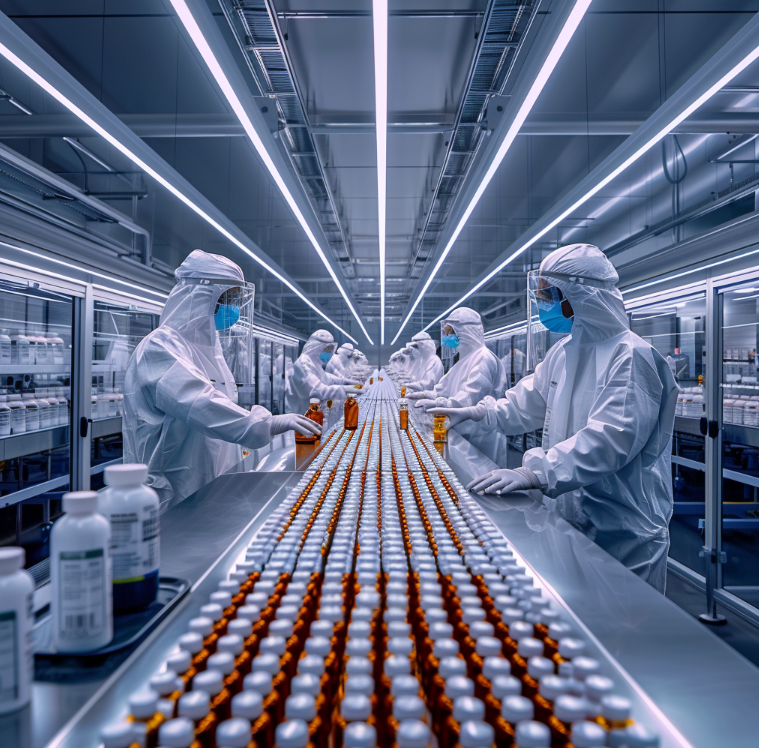
The Stakes Are Higher Than You Think
Picture this: One spark in the wrong place, and your entire pharmaceutical production line becomes a catastrophe scene. Yet most facility managers overlook the silent guardian that stands between routine operations and disaster—your lighting system.
When volatile solvents meet inadequate illumination in pharmaceutical manufacturing, the consequences ripple far beyond a simple equipment failure. Your lighting choices directly impact worker safety, regulatory compliance, production continuity, and ultimately, your bottom line.
Key Takeaways
• Understand how hazardous location lighting prevents explosions in pharmaceutical environments
• Discover the critical classification systems that govern your lighting choices
• Learn implementation frameworks for upgrading existing facilities • Master the ROI calculation methods for hazardous location lighting investments • Access decision-making tools for selecting the right lighting technology
The Hidden Dangers Lurking in Your Facility
Your pharmaceutical manufacturing facility operates in a delicate balance. Flammable gases from solvent-based processes, combustible dust from powder handling, and volatile vapors from chemical reactions create invisible hazard zones throughout your operation. Traditional lighting systems become potential ignition sources in these environments.
The National Fire Protection Association reports that inadequate electrical equipment causes 13% of industrial fires annually. In pharmaceutical facilities, where Class I Division 1 and Division 2 hazardous areas are common, standard lighting fixtures transform from helpful tools into dangerous liabilities. Your current lighting system might be silently compromising safety protocols you’ve spent years developing.
Every pharmaceutical process involving organic solvents, cleaning agents, or volatile APIs creates hazardous atmospheres. These invisible danger zones demand specialized hazardous location lighting that can operate safely without becoming an ignition source. The question isn’t whether you need this protection—it’s how quickly you can implement it before an incident occurs.
Understanding the Science Behind Explosion-Proof Illumination
Hazardous location lighting operates on fundamental principles that prevent ignition in explosive atmospheres. These specialized fixtures contain any potential sparks or heat within their housings, preventing them from igniting surrounding flammable materials.
Think of hazardous location lighting like a submarine operating in dangerous waters. Just as a submarine’s hull keeps deadly pressure at bay while maintaining life-support systems inside, explosion-proof lighting maintains safe internal operations while preventing external hazards from causing catastrophic reactions.
The classification system follows strict guidelines. Class I locations contain flammable gases or vapors. Division 1 areas have hazardous substances present under normal operations, while Division 2 areas encounter them only during abnormal conditions. Temperature classifications (T1 through T6) indicate the maximum surface temperature the fixture can reach safely.
Modern hazardous location lighting incorporates advanced technologies like LED systems with specialized heat management, intrinsically safe designs that limit electrical energy, and purged enclosures that maintain positive pressure with clean air. These innovations deliver superior illumination while maintaining the highest safety standards your pharmaceutical operations demand.
Strategic Implementation: Beyond Basic Compliance
Successful hazardous location lighting implementation requires sophisticated decision-making frameworks that go beyond minimum code requirements. Your facility needs a systematic approach that balances safety, efficiency, and operational demands.
Hazardous Area Classification Matrix
| Zone Type | Hazard Frequency | Required Protection Level | Typical Pharma Applications | Recommended Fixture Type |
|---|---|---|---|---|
| Division 1 | Continuous/Intermittent | Explosion-proof | Solvent storage, reactor vessels | Class I, Div 1, LED |
| Division 2 | Abnormal conditions only | Suitable for location | Process corridors, packaging | Class I, Div 2, LED |
| Unclassified | Non-hazardous | Standard industrial | Offices, break rooms | Industrial LED |
Implementation Checklist
- Hazard Assessment Phase
- Map all process areas using flammable materials
- Identify ventilation patterns and air flow dynamics
- Document existing electrical classifications
- Review incident history and near-miss reports
- Technical Specification Phase
- Calculate illumination requirements per work area
- Determine temperature classifications needed
- Specify ingress protection (IP) ratings
- Plan for maintenance accessibility
- Installation Planning Phase
- Coordinate with production shutdown schedules
- Arrange certified electrician resources
- Plan temporary lighting during transitions
- Establish testing and commissioning protocols
This systematic approach ensures your hazardous location lighting upgrade delivers maximum safety benefits while minimizing operational disruption. The next phase focuses on turning these plans into measurable results through proper execution strategies.
Execution: Transforming Plans Into Protection
Your hazardous location lighting implementation success depends on precise execution timing and methodology. Smart facility managers coordinate these upgrades during planned maintenance windows, minimizing production impact while maximizing safety improvements.
Start with your highest-risk areas first. Solvent storage zones and active reaction vessels demand immediate attention. Create a phased rollout schedule that tackles Division 1 areas during the first phase, followed by Division 2 locations in subsequent phases.
Worked Example: ROI Calculation
Consider a 50,000 square foot pharmaceutical facility with 200 lighting fixtures requiring hazardous location upgrades:
- Standard LED fixtures: $150 each = $30,000
- Hazardous location LED fixtures: $400 each = $80,000
- Installation labor premium: $25,000
- Total investment: $105,000 vs $55,000 (difference: $50,000)
Annual Benefits:
- Insurance premium reduction: $8,000
- Avoided inspection failures: $15,000
- Reduced maintenance costs: $5,000
- Energy efficiency gains: $3,000
- Total annual benefit: $31,000
Payback period: 1.6 years
Partner with certified electrical contractors who specialize in hazardous locations. Their expertise prevents costly mistakes and ensures installations meet stringent inspection requirements. Document everything meticulously—your next regulatory audit depends on comprehensive installation records.
The transformation begins the moment your new fixtures activate, but the real value emerges through ongoing operational excellence and risk mitigation.
Navigating Complex Decisions and Trade-offs
Hazardous location lighting decisions involve nuanced considerations that extend beyond basic safety requirements. Temperature management becomes critical in pharmaceutical environments where process heat combines with lighting heat loads. LED technology offers significant advantages, but fixture selection must account for ambient temperatures and chemical exposures.
Different pharmaceutical processes create unique challenges. Sterile manufacturing areas require fixtures that support cleaning protocols without compromising explosion protection. Tablet coating operations generate both flammable vapors and abrasive dust, demanding specialized ingress protection ratings.
If/Then Decision Framework:
- If your facility handles Class IA flammable liquids (flash point below 73°F), then Class I, Division 1, T6 fixtures are mandatory
- If ventilation systems provide four air changes per hour, then some Division 2 classifications may apply instead of Division 1
- If cleaning protocols require washdown procedures, then IP67-rated enclosures become essential
- If maintenance access is limited, then fixtures with 100,000+ hour lifespans justify higher initial costs
Cost considerations create additional complexity. Premium hazardous location fixtures cost 2-3 times more than standard industrial lighting, but failure costs exponentially more. Smart procurement balances initial investment against long-term operational costs, regulatory compliance expenses, and potential incident costs.
Consider emerging technologies carefully. Smart lighting systems offer remote monitoring capabilities, but wireless communication in hazardous areas requires additional certifications and may introduce new risks that require evaluation.
Advanced Resources and Technology Selection
Your hazardous location lighting technology stack should align with broader facility automation and safety management systems. Modern solutions integrate monitoring capabilities that track fixture performance, energy consumption, and potential failure indicators before they compromise safety.
Essential Technology Categories:
LED Hazardous Location Fixtures: Provide 50,000-100,000 hour lifespans with instant-on capabilities and excellent color rendering for quality control operations.
Intrinsically Safe Emergency Lighting: Ensures safe evacuation during power failures without creating ignition risks.
Smart Monitoring Systems: Track fixture performance and predict maintenance needs, reducing unplanned downtime.
Advanced Selection Criteria: Research fixtures certified by recognized testing laboratories (UL, CSA, ATEX for international operations). Verify temperature classifications match your process requirements exactly. Evaluate manufacturers’ pharmaceutical industry experience and support capabilities.
Establish relationships with specialized distributors who understand pharmaceutical applications. Their technical expertise helps navigate complex specifications and ensures proper fixture selection for your unique operational requirements.
Consider total lifecycle costs including energy consumption, maintenance requirements, and eventual replacement needs. Premium fixtures with longer lifespans often deliver better value despite higher upfront costs, especially in hard-to-access locations where maintenance requires production shutdowns.
Conclusion
Your pharmaceutical facility’s safety depends on decisions you make today about hazardous location lighting. The invisible risks surrounding your operations won’t announce themselves before causing problems they require proactive identification and mitigation through proper lighting selection and installation.
The technology exists to eliminate lighting-related ignition risks while improving operational efficiency and regulatory compliance. Your challenge lies not in finding solutions, but in implementing them systematically before an incident forces reactive changes that cost significantly more than proactive upgrades.
Start with a comprehensive hazard assessment of your facility. Map every area where flammable materials are present, stored, or processed. This foundation enables informed decision-making about lighting requirements and prioritizes your upgrade investments where they deliver maximum safety benefits.
Partner with qualified professionals who understand both hazardous location requirements and pharmaceutical manufacturing demands. Their expertise prevents costly mistakes and ensures installations meet stringent regulatory requirements that govern your operations.
Your facility’s lighting system should be a strategic asset that supports safety, compliance, and operational excellence simultaneously. When properly implemented, hazardous location lighting becomes invisible infrastructure that enables confident operations in environments where safety cannot be compromised.
The question that opened this discussion—about preventing catastrophic failures through proper lighting—has a clear answer. Your hazardous location lighting choices directly determine whether your pharmaceutical manufacturing facility operates safely or becomes another cautionary tale. The technology, knowledge, and resources exist to make the right choice. Your facility’s future depends on acting on that choice today.